Tuesday, May 29, 2018

May 29, 2018


Hello Summer!!
Resultado de imagen para kids having fun in the summer


Let's face it. Everyone's counting down the days until summer vacation - the students, the teachers, even the administrators! Instead of merely marking each passing day off on your calendar, make the countdown fun and give everyone something unique to look forward to!

What's the ABC Countdown?

The "ABC Countdown" is something that teachers put together so that something cool and exciting happens each day as we count down to summer.
When we had 26 days left in school, teachers assigned each day a letter of the alphabet; for example, the 26th day is "A," the 25th day is "B," and so on, all the way down to the last day of school which is "Z."

Have Fun With It
If you have fewer than 26 school days left in your year, consider spelling out a shorter word, such as the school name, mascot, or even just the word "Summer." It doesn't matter so much how long the countdown is, just that you have fun with it!

Examples You Can Use
Next, it's time to get creative! On "A Day," we called it "Art Day" so the kids got to do a special Art lesson in the classroom. On "B Day," we called it "Buddy Reading Day" so the kids brought books from home that they got to read with a friend during a silent reading time. "C Day" is "Career Day" and the kids dressed up as a person in the career they would like to enter someday. Future doctors wore white coats and future football players wore their jerseys and brought along a football.

The countdown continues like that until the final day of school, "Z Day," which stands for "Zip Up Your Bags and Zoom Home Day!" The kids love the countdown because it gives them something to get excited about each day.

Sound like something you might like to do?
·        A Art day: Create a special art project in class
·        B Buddy reading: Bring a book to read with a friend
·        C Career day: Dress or bring props to show a job you may enjoy
·        D Donut day: We will enjoy donuts
·        E Experiment day: Experiment with science
·        F Favorite book day: Bring a favorite book
·        G Game day: Your teacher will teach a new math game
·        H Hat day: Wear a hat today
·        I Impromptu speech day: Perform speeches in class
·        J Joke day: Bring an appropriate joke to share at school
·        K Kindness day: Share some extra kindness today
·        L Lollipop Day: Enjoy lollipops in class
·        M Memorial Day: No School
·        N No homework: No homework tonight
·        O Obstacle course: Compete in obstacle courses
·        P Picnic lunch day: Bring a sack lunch
·        Q Quiet Day: Who is the quietest student in our class?
·        R Read a poem day: Bring a favorite poem to share with the class
·        S Summer birthdays and sing a song: You can share birthday treats
·        T Twin day: Dress like a friend
·        U Uplift someone day: Give compliments to each other
·        V Video day: Watch an educational movie today
·        W Water balloon toss day: Compete and try to not get wet
·        X X-change autographs day: Go outside and trade signatures
·        Y Year-end clearance day: Clean up desks and the room
·        Z Zip up your bag and go home day: Last day of school!
Have fun with your countdown and enjoy these final days with your class! Testing is over and it's time to kick back and enjoy your students to the max! Happy Summer, teachers!

Enjoy,
Ms. Nora Sierra
EC Assistant Principal

Friday, April 20, 2018

April 20, 2018


Wrapping Up the School Year


The end of the school year brings the expected joy at finishing another year, and perhaps some sadness at leaving behind a year filled with great experiences, teachers, and friends. Consider that this may be a bittersweet time for your child and help him celebrate as you ease any anxiety associated with the end-of-school days.


Communicate and Connect

The daily life and structure of school your child has grown used to is about to end. She may be simply overjoyed to enter the relaxed days of summer, but more likely, she is probably experiencing some nervousness about leaving the familiar world of school.
Let your child know that he/she doesn't have to feel unequivocally happy about school ending even though his classmates may seem through-and-through ecstatic about the prospect of summer vacation. Relate a personal story about a time you were sad to leave school or ask him to tell you what he'll miss about being in school.

Help your child keep in touch with classmates. Ask her which friends she'd like to keep seeing over the summer and gather contact information for them. Before school is out, arrange some summer playdates for her so she knows that she can look forward to seeing her class friend’s weeks after school ends. If your older child has an email account, encourage her to keep in touch by computer.

If your child is attached to his teacher, have him/her write an end-of-year thank-you letter or card, or create some other kind of remembrance. Working on the project will help him feel connected to his teacher, and he'll appreciate the idea of giving something that will last beyond his attendance in class.

If your child is anxious about a new building or new grade, try to arrange a visit while this year's still in session. If that's not possible, schedule a time during the summer to make the trip or find out if there will be an orientation. Letting your child know that she doesn't have to walk into a new situation sight-unseen will help ease first-day-back worries.

Finally, remember that however your child does on his/her report card, it is vital to praise and encourage all they have learned and how they have changed over the year.

Enjoy,
Ms. Nora Sierra
EC Assistant Principal
Discovery School
(504) 9500-1720

Thursday, April 5, 2018

April 5, 2018


STEM AND PRESCHOOL


One of the newer educational terms that we see frequently in the news is STEM education. But what exactly is STEM education and is it appropriate for preschoolers?

STEM is an acronym for science, technology, engineering, and math. STEM Education, a term initiated by the National Science Foundation, refers to an educational approach which integrates more than one of these disciplines. Science, technology, engineering, and math may seem like lofty subject matter for preschool children. Preschoolers spontaneously engage in STEM activities indoors and out on a regular basis. With a little guidance from us, we can enhance children's opportunities to engage in STEM learning and develop their critical thinking skills.

While building with blocks, children can build bridges and ramps, incorporating engineering and math. They can add a technology component by researching these on the computer. Outdoors, children could help solve the problem of getting water to a garden they helped to plant, drawing on their science and engineering knowledge. Incorporating the use of children’s garden tools like rakes, shovels, and a wheelbarrow build on this activity to provide an even broader STEM experience.

STEM ACTIVITIES FOR KIDS
  • ·         Go on a nature walk. A nature walk can be a great outdoor STEM activity for children. Take a reusable bag and encourage your child to collect interesting objects she sees like small round stones, leaves, seed pods, or flowers. When you get home, help her sort her treasures into categories, such as color, texture, size, and shape. Skills used: math and science
  • ·         Do a cooking activity together. Cooking with children is another way to engage kids in learning at home. Look up an interesting recipe together online. Follow the recipe letting your child help measure and mix. Skills used: science, technology, and math
  • ·         Build ramps to test which cars, balls, or marbles go the fastest. Use a board, sheet of cardboard, or small table with one side elevated to make a ramp. Try rolling a variety of objects, two at a time down the ramp to see which is fastest. Record your findings on a chart. Skills used: engineering and math
  • ·         Set-up building activities with paper or plastic cups. Give a challenge such as, "How high can you make a tower of cups?" Measure each tower and record their height. Skills used: engineering and math
  • ·         Explore the grocery store. With your child, purchase some fruits and vegetables that you have never tried before. Before cutting up the fruits and vegetables, have your child predict what will be inside. Then, with careful supervision, have your child help you cut up small pieces to try. Invite your family members to a tasting party. Make a graph that shows everyone's favorites. Skills used: science and math
  • ·         Play with water. Water is a rich STEM material and water play activities is a great way to engage kids. Provide a basin of water outside so you don't have to worry about spills. Provide tools to experiment with like a turkey baster, empty dish detergent bottles, plastic measuring cups, etc. to fill and compare. Skills used: math and science

The possibilities for STEM education are endless. Children love to experiment, combine new substances, build, knock down, collect, sort, and have fun while learning. You were probably having your child do STEM activities at home and didn't know it. Look for additional opportunities to build STEM activities in your daily routine.

Enjoy,
Ms. Nora Sierra
EC Assistant Principal


Tuesday, March 20, 2018

March 20, 2018


EARLY CHILDHOOD EDUCATION SPRING SCIENCE ACTIVITIES FOR KIDS


 Early Childhood Education has many science activities as part of their program and they are a wonderful way to help young children discover some fascinating facts about nature. Warmer weather provides the perfect opportunities for observing plants growing, insects crawling and all the other signs that the season is changing. Plant, seed, insect, and weather science activities are just some of the fun experiences you can share with young children.
Science is a significant part of any effective early childhood education program. It provides many opportunities to learn and use new scientific words, observe real world science, record data, and discuss findings. Below are three fun spring science activities you can do with preschoolers to bring in the new season while learning lots about it.

Seed Germination
This wonderfully simple activity enables young children to observe how seeds germinate and grow into plants. Seed germination will take about seven days to see the full results. Children can observe the growth stages and record their observations. Place a bean seed into a clear mason jar along with a wet paper towel. Place the jar in a spot that gets lots of sunlight, like a window sill. Your child will be fascinated to watch the seed develop into a plant.

Water Movement in Plants
Using a daisy, carnation or a Queen Anne’s Lace flower, your child can look at the movement of water from the bottom of the stem up into the leaves and petals. This activity takes only a day or two depending on the flower you are using. Pour water into a clear vase until it is about two-thirds full. Add one or two drops of food coloring to the water. Place a light-colored flower into the water. Watch as the colored water moves through the stem of the plant up into the leaves and the petals until the flower has changed its color.

Rainbow Formation
Create a rainbow in your backyard using a garden hose. A quick and easy activity, your child will learn about light refraction and the formation of rainbows. You will need to do this on a warm sunny day to create the best rainbows. Pull your garden hose into the middle of your lawn. Slowly turn on the tap and spray the water into the air. Watch as a rainbow forms in the mist. As the light from the sun travels through the small water droplets, the colors become separated, creating a rainbow.

Enjoy,

Ms. Nora Sierra
EC Assistant Principal

Friday, March 2, 2018

March 2, 2018


PAINTING IN THE PRESCHOOL


Painting is an important part of education in Pre-K. It’s messy, but purposeful. Painting is a big part of the little dreamer life. Painting is much more than a simple activity. It is a way for different types of children to express themselves in their own special way. Painting also helps children use their senses, express emotion, explore process and outcomes, explore color, and create aesthetically pleasing works and experiences. The paintbrush becomes an instrument of inner peace allowing the creative process to allow both good and bad feelings from the artist. As a child paints, both sides of the brain are engaged, strengthening the connection between the two hemispheres. Students enjoy the feeling of the cool paint gliding across their arms.  Next time your child brings a new picture home, remember that art is a language and that painting benefits children emotionally, mentally, physiologically, and spiritually.

Painting Benefits

Among the various aspects that painting allows you to cover, some of the greatest benefits integrated with painting are:
·        Painting can help your children communicate their emotions or feelings. Using different colors, they can express themselves without the use of words.
  • ·        Painting allows children an educational opportunity that is also fun and exciting.
  • ·        Painting aids children acquire hand-eye coordination, an important skill in their age. This is developed while they learn to paint the parts that they see; making sure their hand movement is at par with their vision.
  • ·        Painting aids your child develop mobility skills. Their hand muscles are being used, which allows them a scope to develop both mentally and physically.
  • ·        Painting helps children acquire skills on how to focus on trivial details, painting on a canvas or a piece of paper requires varied painting skills.
  • ·        Painting can be a great podium for children to progress and discover their creativity. They learn about various color mixtures and how they go together.
  • ·        Painting can help children learn sizes, shapes, patterns, and designs. These are all critical aspects of their curriculum during pre-school years.
  • ·        Painting helps children develop their decision-making skills. They need to plan as they choose which color should be used for different parts of the painting.
  • ·        Painting can play the role of therapy for a child who might be feeling different emotions; whether these feelings are subtle or extreme in nature. In addition to communication, painting can help children feel better about things that they may have bottled up inside.
  • ·        Perhaps the greatest benefit is the fact that painting provides you and your children a great platform to bond and spend valuable time together.

These are just a few benefits your child can acquire from painting. Painting can be a significant part of your child’s overall development and upbringing. Making it a point to take some time out occasionally to paint with your child can prove to be very rewarding overall.

Enjoy,

Ms. Nora
EC Assistant Principal
Discovery School

Monday, February 26, 2018

February 26, 2018

5 Reasons to Love Dr. Seuss


One day I overheard a lady proclaiming to the world that Dr. Seuss’ books were absurd and should not be read to children. Here are five reasons you should love Dr. Seuss:


1. Great for Beginning Readers and Mastering Phonics
A child who is learning to read is learning to connect the sounds that go with letters so that he can then put them together to make words … which then become sentences. Repeating sounds frequently, help a child master this skill. Dr. Seuss is the master of repetitive sounds and engaging stories, while using limited vocabulary—an ideal combination for a beginning reader. A good example: Hop on Pop.

2. Great Read-Aloud Books
Thanks to his clever rhyming, Dr. Seuss’ books sound great when they are read aloud. Did you know that reading to an infant helps with brain development, speech skills, and bonding between parent and child? There are a lot of Dr. Seuss books available in board book format (Bright and Early, Board Books), which are the perfect size and durability for little hands and curious mouths. Example: Put me in the Zoo

3. Great for Reluctant Readers
Sometimes the hardest part of reading is getting your child to read. I think you would be hard pressed to find a child that would not be entertained by the sheer absurdity of Dr. Seuss’s wacky plots and zany characters. Example: I Wish that I Had Duck Feet. Sometimes a little fun and excitement is all that is needed to get kids reading.

4. Great for Teaching Life’s Lessons
With enchanting worlds and wonderful creatures, both familiar and unfamiliar, Dr. Seuss teaches readers many admirable life lessons. Example: The Lorax is a great book for teaching children the importance of taking responsibility for the earth.

5. Great for Gift Giving and Children of All Ages
Need a gift? Dr. Seuss is your guy! He has written books that children of all ages can appreciate, even college students. From Go, Dogs, go! for the littlest kids, to Oh, the Places You’ll Go for the graduating college student.

I am sure that you could add your own reasons for loving Dr. Seuss, so we invite you to do so in the comments section below. Be sure to share your favorite Dr. Seuss book while you are at it! More Seuss fun can be found at www.seussville.com.


Oh, the Thinks You Can Think! by Dr. Seuss


Enjoy,
Ms. Nora Sierra

EC Assistant Principal

Wednesday, February 7, 2018

February 7, 2018

Movement in the Early Years

Related image

Movement in the Early Years

Movement allows children to connect concepts to action and to learn through trial and error. “If you walk into a good kindergarten class, everyone is moving. The teacher is moving. There are structured activities, but generally it is about purposeful movement, “comments Nancy Carlsson-Paige, a professor emerita of early-childhood education at Lesley University and the author of Taking Back Childhood, describing the ideal classroom setup. In the classroom culture she advocates for, “[Kids] are getting materials for an activity, they are going back and deciding what else they need for what they want to create, seeing how the shape of a block in relation to another block works, whether they need more, does it balance, does it need to be higher, is it symmetrical. All of these math concepts are unfolding while kids are actively building and moving.”

Research has shown time and again that children need opportunities to move in class. Memory and movement are linked, and the body is a tool of learning, not a roadblock to or a detour away from it. Any parent who has brought home a kindergartener after school, bursting with untapped energy yet often carrying homework to complete after a seven-hour day, can reasonably deduce why children today have trouble keeping still in their seats. Many children are getting 20-minute breaks, or none. Recess, now a more frequent topic of research studies, has been found to have “important educational and developmental implications.” Schools that have sought to integrate more movement and free play, such as short 15-minute recess periods throughout the day, have seen gains in student attention span and instructional time. As Carlsson-Paige points out, “Recess is not a separate thing in early-childhood education.”


“Children need opportunities to move in class.” Ben Mardell, a professor of early-childhood education at Lesley University and the project director of the Pedagogy of Play initiative at Harvard’s Project Zero, observes that even when adults do incorporate play into learning, they often do so in a way that restricts free movement and agency. “The idea that there should be formal instruction makes it no longer play,” says Mardell. “In play the player is choosing to participate, choosing a goal, and directing and formulating the rules. When there is an adult telling the kids, ‘This is what we are supposed to do,’ many of the important developmental benefits of play get lost.”


The role of play has been established not just as a part of learning, but as a foundation for healthy social and emotional function. The National Association for the Education of Young Children has published widely circulated position papers on the need for developmentally appropriate teaching practices and for reversing the “unacceptable trends in kindergarten entry and placement” that have been prompted largely by policy makers’ demand for more stringent educational standards and more testing.  Some teachers are enacting changes, seeking ways to bring movement back into the classroom.
Play-based preschools are seeing increased popularity. Enrichment programs engaging children in movement with intention (yoga, meditation, martial arts) are also gaining traction.

Enjoy,
Ms. Nora Sierra
EC Assistant Principal

Monday, January 29, 2018

January 29, 2018

Why are Stories Important for Children?


Stories play a vital role in the growth and development of children. The books they read and the characters they get to know can become like friends. It’s also good for children to understand that books are a useful source of information and that good reading skills are important for success in their future lives. Reading also helps children with their confidence levels, coping with feelings and language and learning.

Confidence Levels

Children who can read well are more likely to have higher confidence 
levels. This will benefit them in school as they’ll feel able to participate fully in activities. Another part of building confidence and self-esteem is knowing where you fit into the world. Stories can help with this process by showing children what people’s lives are like where they live and in other parts of the world.

Language and Learning

Stories are a great way to introduce new words and ideas into a child’s language – starting with picture books for the very young, working up to more complex novels for teenagers. Stories can help children learn about concepts such as shape, size, space, and color, up and down, inside, and outside, numbers and the names of objects. They can also teach children about everyday tasks, such as how to brush their teeth, taking care of animals, cleaning and tidying and preparing food.
Stories are also useful for teaching more complex ideas, such as the importance of sharing, the passage of time, compassion for others. They can be useful when trying to explain traumatic events, such as family break-ups and bereavement.
Fiction based on real-life can also help children with their own life experience – it shows them how diverse the world is and that some people’s lives are vastly different to theirs. And what’s so great about learning through stories is that the process is done in a natural way. There’s no actual teaching involved at all, they learn from simply reading the story.

Relaxation

Reading stories can be helpful for relaxation, before bedtime for example. They allow children to forget the stresses and strains of the day and indulge in fantasy for a while. The soothing familiarity of a much-loved story, the rhyming and repetition in a picture book, plus the sense of security that time spent reading together can foster, all help the child to relax.

Development of Imagination

Stories help to develop a child’s imagination by introducing new ideas into their world – ideas about fantastical worlds, other planets, different points in time and invented characters. It’ll encourage the children to realize that they can, and should, imagine anything they want. The beauty of stories is that they can be super realistic or incredibly fantastical. They can be reading about children growing up in the same situation as them one minute and about another species, Martians holidaying on Jupiter for example, the next.

Coping with Feelings

When children read stories that contain feelings it can help them understand and accept their own feelings. It helps them understand that there are other children who feel the same way and they are not alone. This helps the child understand that feelings are normal and should be expressed. Watching their responses to the feelings of the characters in the stories will give you some idea of how a child feels about certain situations and emotions. For example, how the child responds to the character in the story feeling sad or scared will give you some idea of how the child thinks.
As you can see, children’s stories are important for many reasons and form a vital part of the growing process. Being part of that process can bring writers a sense of satisfaction as well as being great fun.

Enjoy,
Ms. Nora Sierra

EC Assistant principal

Friday, January 12, 2018

January 12, 2018

Why Hands-on Learning at Preschool Is Best


For decades research has shown that hands-on learning at preschool is best. While knowledgeable early childhood educators understand how valuable it is, many who have the decision-making power do not. That's why it's important that parents educate themselves on the issue and become advocates for hands-on learning at preschool and, thus, advocates for what's best for their young children.

What Is Hands-On Learning at Preschool?

Hands-on learning at preschool simply means the children are active learners throughout the day: exploring with materials, learning by doing, moving throughout the classroom, and interacting with one another. The teacher acts as a facilitator – not by telling the children what to do with the materials – but by asking questions that challenge them to use them in new and creative ways. A teacher skilled at hands-on learning will often begin her inquiries with how: How can you build that bigger without it falling? How can you make sure those plants grow healthy? How can you all play together so everyone has a turn?

Most of us experienced hands-on learning when we were children in preschool and kindergarten, and it contributed greatly to our fond memories for those early years of learning. Scholars in early childhood development have written extensively on the value of hands-on learning, arguing that it's developmentally appropriate because young children discover best through their senses, through movement, and through their sense of wonder and curiosity about the world around them. The National Association for the Education of Young Children (NAEYC) – the world's largest organization of early childhood professionals – says a quality early childhood education is one in which “Children are given opportunities to learn and develop through exploration and play...materials and equipment spark children's interest and encourage them to experiment and learn.”

Enjoy,
Ms. Nora Sierra

EC Assistant Principal

Friday, November 17, 2017

November 17, 2017


Why Art and Creativity Are Important

Your preschooler is having a blast finger-painting with a mix of colors. Little kids are masters of the moment -- they love the way it feels when they smear paint on paper, how it looks when they sprinkle glitter, and even the soft sound a brush makes as it crosses the page, says Amy Yang, founder of Brooklyn Design Lab, an art school for children. Unlike older kids and adults, most toddlers and preschoolers aren't self-conscious about what they're doing or focused on creating a finished product. Allowing kids to enjoy the process of creation -- can reap big rewards. "Children will be better off overall if they're allowed just to be in the moment and express themselves," she says.

Why Art?

Fostering creativity won't just increase your child's chances of becoming the next Picasso. You're also helping him develop mentally, socially, and emotionally, says Ecklund-Flores. Creating art may boost young children's ability to analyze and problem-solve in myriad ways, according to Mary Ann F. Kohl, author of Primary Art: It's the Process, Not the Product. As kids manipulate a paintbrush, their fine motor skills improve. By counting pieces and colors, they learn the basics of math. When children experiment with materials, they dabble in science. Most important perhaps, when kids feel good while they are creating, art helps boost self-confidence. And children who feel able to experiment and to make mistakes feel free to invent new ways of thinking, which extends well beyond the craft room.

Enjoy,
Ms. Nora Sierra

EC Assistant Principal
Monday, November 6, 2017

November 6, 2017


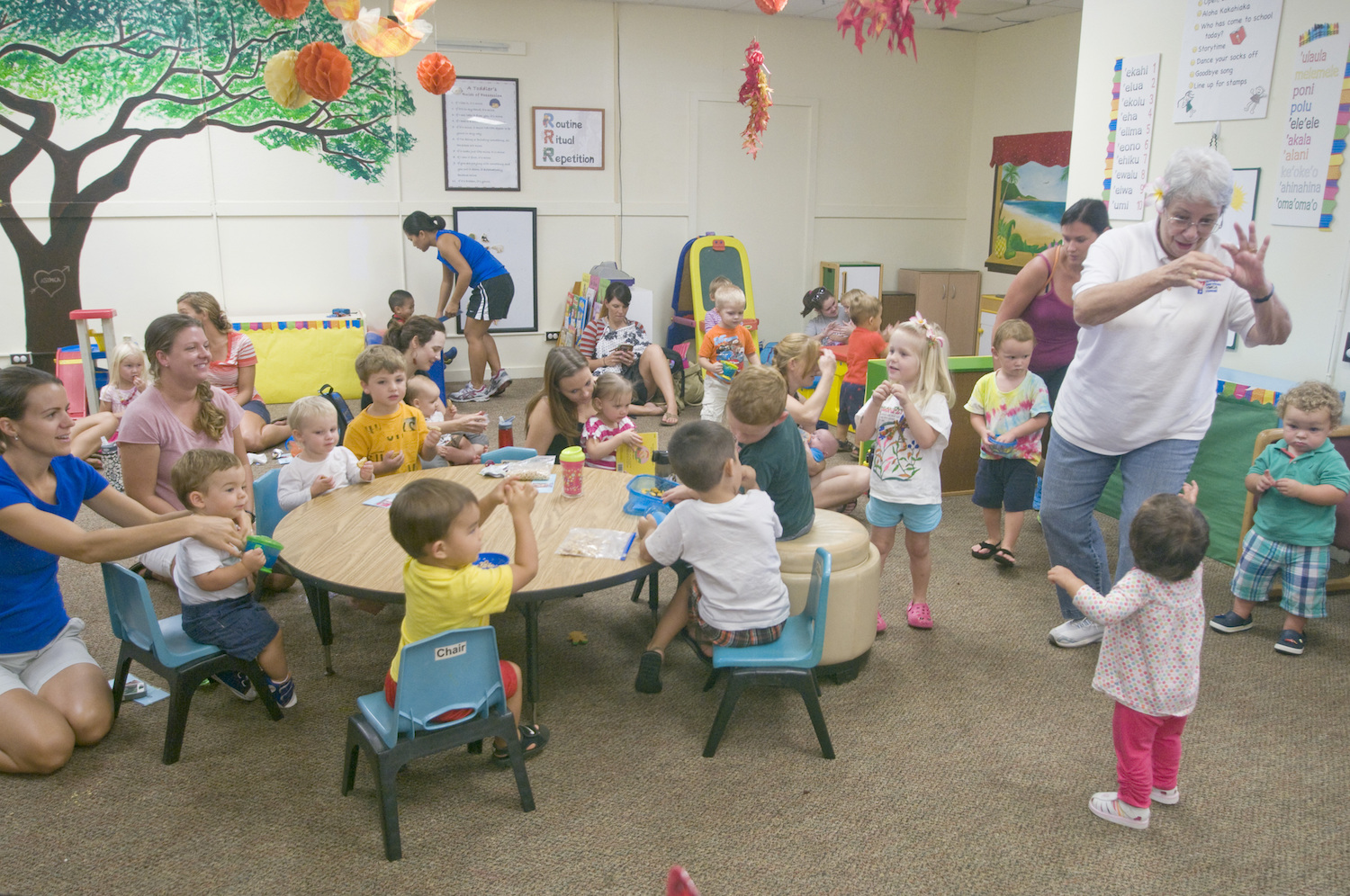
The Importance of Listening Skills for Your Preschool Child’s Learning and Development


Most people know that hearing and speech are very important in a child’s development. What is as important is the skill of listening. Some people think hearing and listening are the same skill, but they are not. Hearing is simply the physical act of receiving sound stimulation through the ear and sending it to the brain for reception. Listening, however, involves a mental process of tuning into a sound, recognizing its importance, and interpreting the information at the brain. For the developing child, both hearing and listening are important, since a child can have good hearing, and not have good listening skills.

The ability to detect a sound is hearing, and the ability to attach meaning to it is the foundation for development. This is listening. Sounds are not only speech sounds. Sounds are all around us. Before a child learns to produce speech sounds, they begin to respond to sounds in their environment—responding to their mother’s voice, or a dog barking, or a baby crying. These sounds imprint their brain with rhythm, inflection, pitch, intensity changes and more. These sounds prepare the way for the ear to respond to incoming speech sounds.

The ear is also one’s balance and coordination center. Often, weak early motor skills suggest the possibility of future weak listening skills. The ear, through vibrational stimulation, also impacts all of one’s senses, either directly or indirectly, so poor listening skills often accompany children who have sensory integration or sensory processing issues. Sometimes, children are too sensitive to sound, or crave vestibular sensation like spinning, or enjoy more than normal, hugs or squeezes. These needs are all directly related to how sound stimulation is sent to the brain through the ear.

Listening skills become extremely important when the child enters a learning environment such as a preschool. They are equally important to their social development as they attend and participate in conversations. Listening to spoken language is an integral part of developing speech, language, and communication. A preschool child also enjoys listening to music, songs, and stories. Some children enjoy music but can’t listen to conversation for long periods of time. Other children can listen and attend only if a visual picture is also present like the television. Each of these children have different listening skills, some of which can have a negative response in a school environment.

Mastering listening skills include developing auditory perceptual skills such as auditory detection, discrimination, recognition, sequencing, and memory. The blend of these skills allows for vocabulary development, proper grammar skills, future reading skills, and the ability to listen in background noise. These skills, when weak, can be enhanced by repatterning how the ear responds to surrounding sounds. The best time to repattern these skills is during the preschool years, as the brain is still growing. This can be done with repetitive activities that exercise the specific weaknesses over a long period of time. Speech Pathologists help develop communication skills, also typically over a long period of time.

Enjoy,

Ms. Nora Sierra

EC Assistant Principal

Monday, October 23, 2017

October 23, 2017


STRATEGIES THAT DEVELOP 10 AS A BENCHMARK NUMBER


Students work with tens as they explore place value, ten frames, and hundred charts.  Our entire number system is built from a system of tens. Developing a solid understanding of 10 as a benchmark number and how it works within our number system is key for students’ mathematical development.  Counting by 10s and seeing how each decade is organized builds numeracy, but it also supports students as they begin to add and subtract larger numbers.

Helping students develop the idea of 10 as a benchmark number is so important in our number system. First grade math and the beginning of second grade math reinforce this important addition fact concept. Encourage students to Make 10 and Use 10 when adding.
When you teach students math facts, do you help students understand, learn, and develop strategies for solving different math facts?  Do you work on memorizing math facts with a variety of flash cards and games?  Or do you do a combination of teaching strategies and fact memorization?


WHY SHOULD I TEACH STUDENTS STRATEGIES TO SOLVE MATH FACTS?

Many students come into second grade still counting on their fingers when adding larger numbers. They need to move toward more efficient strategies, but they’re glued to their fingers because it’s safe and easy.  Memorization may be difficult for them or maybe they haven’t had enough practice.

We help students develop fluency with basic facts so that they can learn to think strategically.  In between a student who counts each object and a student who has a fact memorized, are students who are using a variety of strategies to solve problems. Strategies help students find the answers to math facts, even if they forget. Strategies also transfer from solving one-digit problems to solving larger, multi-digit problems.

Students need to understand the value of using 10 as a benchmark number when adding within 20,  to aid in math fact memorization, but also so that they can transfer that skill when adding within 100, and again transfer it to adding within 1000.  Using tens to solve basic math facts not only helps students develop a strategy for solving facts they may not have memorized, but it leads toward students being able to solve two- and three-digit addition problems.

Enjoy,

Ms. Nora Sierra
EC Assistant Principal


Wednesday, October 11, 2017

October 11, 2017


3 Easy Steps to Write your Name


Recognition
The first stage of learning names occurs when children start to recognize them! Young children begin to recognize the shape of their initial letter and often identify that first letter as “MY NAME!” They might find that initial letter in other places (separate from their names), point to it and say, “Look! There’s my name!” even if it is just the one letter.
In preschool, we can do lots of things to foster children’s recognition of their names. We label everything (lockers, change of clothes cubbies, snack chairs, carpet squares, folders, attendance chart, helper chart, and the alphabet wall) with their names and pictures, so that they begin to claim ownership of that very important word!
We use circle time as an opportunity to practice recognizing not only the child’s own name, but the names of all the classmates as well. With repeated exposure and practice recognizing each other’s names, the children begin to identify letters.

Spelling
The next step, after children can recognize their names is to begin to spell them orally. We practice this in many ways. A child might be able to recite, “E-T-H-A-N” without seeing it written down. Then they will notice each letter. We provide a name activity like this one each morning for our students to practice. We practice with both capital letters, and we also practice matching capitals to lower case.


Writing
When the children are comfortable with recognizing and spelling their names, the next step is to work on writing them. Often these steps overlap and work in conjunction with each other! We give our children lots of opportunities to write their names with sidewalk chalk, paint, markers, in salt trays, etc. They are also work on strengthening their hand muscles and refining their fine motor skills. Our older Pre-K students (less than 1 year to kindergarten) also sign in their names each morning. It’s such a rewarding way to keep track of their progress. When children begin to write, they often use what they already know about names.

Enjoy,

Ms. Nora Sierra
EC Assistant Principal